A Living Textile Tradition
Hungary's folk costume tradition is not a museum piece. While daily wear has long since modernised, traditional garments remain deeply woven into the country's cultural fabric. Festivals, weddings, dance performances, and national celebrations regularly bring out the ornate costumes that once defined regional identity across the Hungarian countryside.
What makes Hungarian traditional fashion particularly noteworthy is its extraordinary regional diversity. Each village and county developed distinct patterns, colour palettes, and construction techniques. A trained eye can identify the wearer's place of origin from the embroidery style alone, much as a wine expert can identify a vineyard from a single sip.
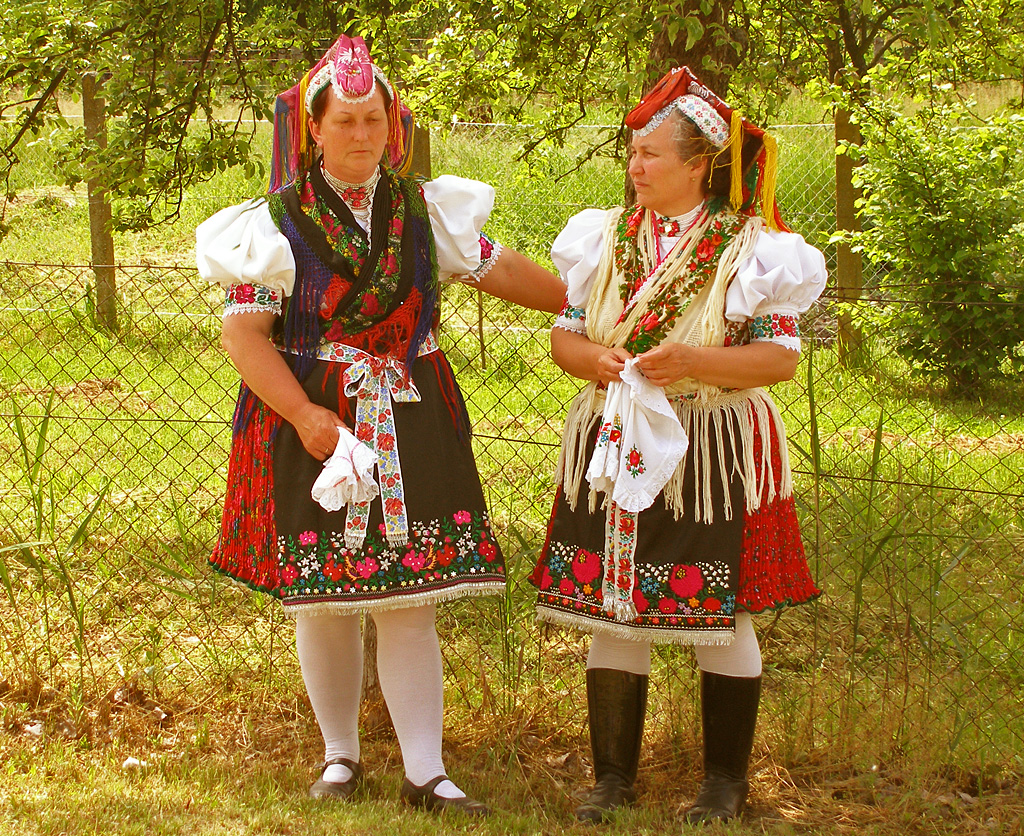
Matyo Embroidery: UNESCO Intangible Heritage
The most internationally recognised Hungarian textile tradition is the Matyo embroidery from the town of Mezokovesd in Borsod-Abauj-Zemplen county. In 2012, UNESCO inscribed Matyo folk art on the Representative List of the Intangible Cultural Heritage of Humanity.
Matyo embroidery is characterised by bold floral motifs, typically featuring roses and peonies, executed in a vivid palette of red, blue, yellow, and green against white or dark backgrounds. The technique is distinctive: stitches are densely packed to create a surface that appears almost three-dimensional, a quality referred to locally as "writing in thread."
The Matyo community considers their embroidery not merely decoration, but a form of visual storytelling. Each floral composition follows inherited patterns that the embroiderer adapts and personalises, ensuring that no two pieces are ever identical.
Today, you can see Matyo embroidery at its source by visiting the Matyo Museum in Mezokovesd. The town also hosts an annual Easter festival where residents wear full traditional costume, providing one of the best opportunities to see these garments in their intended context.
Kalocsa: The Art of Painted Flowers
Southern Hungary's Kalocsa region is famous for a different embroidery tradition, one that evolved from wall painting into textile art. The characteristic Kalocsa motifs feature stylised flowers, peppers, and wheat arranged in symmetrical compositions, typically executed in bright primary colours.
Originally, women painted these patterns directly onto whitewashed walls and furniture. The tradition transferred to fabric in the early twentieth century, when Kalocsa embroidery became popular as both folk art and a commercial product. The patterns are now applied to tablecloths, blouses, aprons, and decorative items sold throughout Hungary.
A visit to the Kalocsa Folk Art House offers practical insight into the techniques involved. The town's artisan workshops welcome visitors and some even offer short embroidery classes, making it possible to try the craft firsthand. The nearby Kalocsa porcelain factory also applies these traditional motifs to ceramics.
Diszmagyar: Hungary's Court Costume
While folk costumes represented rural Hungary, the Diszmagyar (ceremonial Hungarian dress) served as the formal attire of the aristocracy and later the broader upper class. This elaborate costume, which crystallised into its recognisable form in the seventeenth and eighteenth centuries, was worn at coronations, state banquets, and official functions.
For men, the Diszmagyar consisted of a richly embroidered dolman jacket, a fur-lined mente (overcoat), tight trousers, and high leather boots. Women's versions featured similarly ornate jackets over full skirts, complemented by elaborate headdresses and jewellery. The embroidery was often executed in gold and silver thread, using patterns that drew from both Eastern and Western European decorative traditions.
Though no longer worn in daily life, the Diszmagyar remains a powerful cultural symbol. It appears at state ceremonies, is studied in fashion courses at Hungarian universities, and has inspired several contemporary Hungarian designers who reinterpret its elements for modern collections.
Regional Variations Worth Knowing
Beyond Matyo and Kalocsa, several other regional costume traditions deserve attention:
- Sarkoz (Tolna County) - Known for exceptionally elaborate women's headdresses and dark, richly embroidered fabric. Sarkoz costumes are among the most visually dramatic in Hungary.
- Holloko (Nograd County) - This UNESCO World Heritage village hosts an Easter festival where the entire community dresses in the local Paloc-style costume, featuring white pleated skirts and floral embroidered vests.
- Kalotaszeg (Transylvania) - Though now in Romania, the Kalotaszeg Hungarian community maintains some of the most sophisticated folk embroidery in the Carpathian Basin, with a distinctive geometric style that differs markedly from the floral traditions of the Hungarian plains.
- Szur (Great Plain) - The szur is a heavy felt overcoat traditionally worn by shepherds on the Hungarian Great Plain. Decorated with elaborate applique work, it represents a uniquely Hungarian approach to functional outerwear as wearable art.
Traditional Fashion in Contemporary Design
Hungarian designers are increasingly drawing on folk traditions as a source of inspiration rather than simple reproduction. This approach reflects a broader European trend toward "slow fashion" and meaningful craft, but in Hungary it carries particular weight because the source traditions remain living practices rather than historical curiosities.
Budapest-based designer Anita Benes, for example, incorporates Matyo-inspired motifs into modern silhouettes, while the label Domotex creates home textiles that translate Kalocsa patterns into minimalist colour palettes suitable for contemporary interiors. At the higher end, Hungarian Fashion Week regularly features collections that reference folk embroidery techniques in unexpected materials and contexts.
For visitors interested in this intersection of old and new, the Museum of Applied Arts in Budapest maintains an excellent textile collection that traces the evolution of Hungarian fashion from folk origins to modern interpretation.
Where to Experience Traditional Fashion
The most rewarding way to engage with Hungarian traditional fashion is to witness it in context. Here are the best opportunities throughout the year:
- Holloko Easter Festival (March/April) - The most photogenic display of Hungarian folk costume, set against the UNESCO-listed village's whitewashed houses.
- Busojars Festival, Mohacs (February) - Features both traditional costumes and the dramatic carved masks of the Busojars carnival tradition.
- St. Stephen's Day, Budapest (August 20) - National Day celebrations include folk costume processions and performances throughout the capital.
- Matyo Museum, Mezokovesd - Year-round exhibitions on Matyo embroidery with live demonstration workshops.
- Central Market Hall, Budapest - The upper floor offers a wide selection of embroidered textiles, from affordable souvenirs to museum-quality pieces.

